





Local News 🟡
How to save and Invest in Gold
- Published:
- Updated:
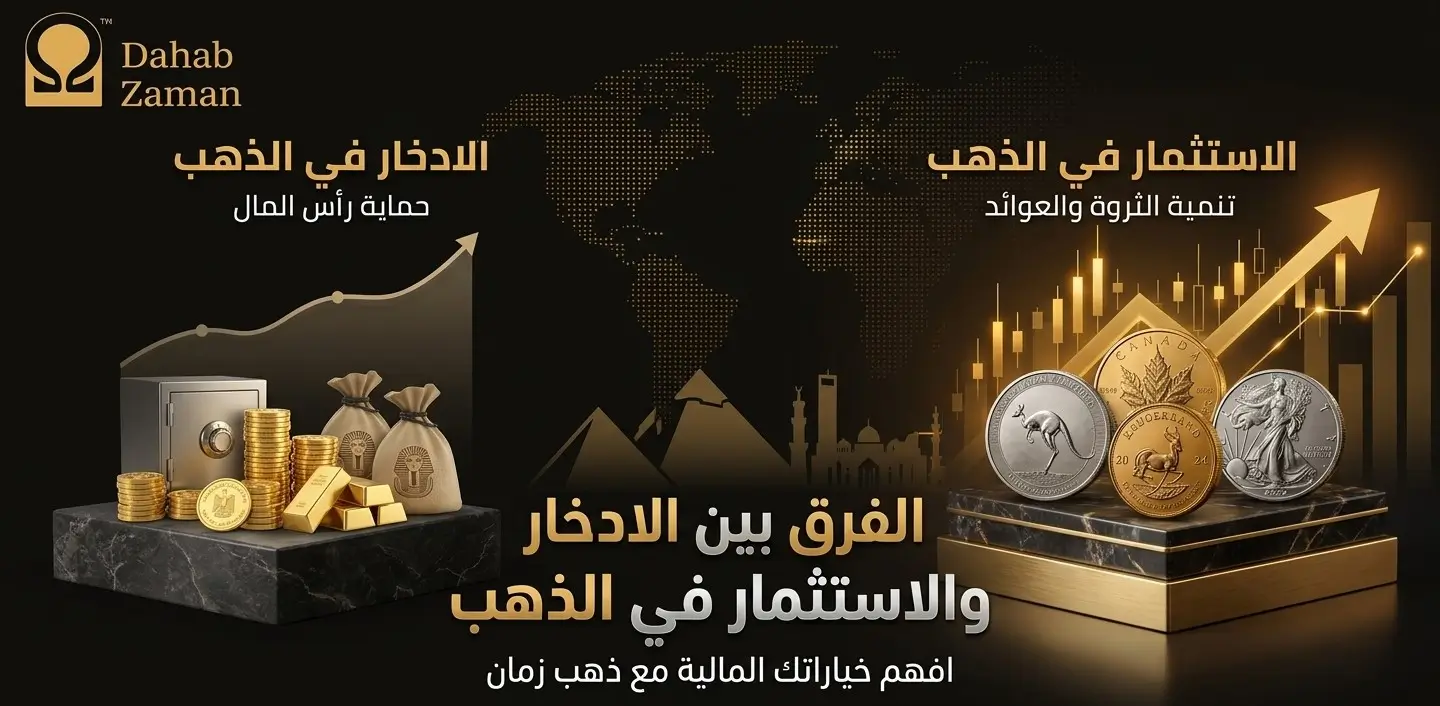
Gold investment serves as a core pillar in modern portfolio construction. The precious metal uniquely combines three characteristics rarely found together in any other financial asset: global liquidity, inflation-hedging capability, and a low correlation with stocks and bonds.
Designed specifically for beginner and intermediate investors in Egypt and the wider Arab region, this guide outlines the primary institutional strategies for integrating gold into an investment portfolio. It focuses on gold bullion bars and coins rather than jewelry, highlighting the fundamental differences in premiums, liquidity, and storage costs. The analysis draws on 2024–2025 data from the World Gold Council (WGC) and the London Bullion Market Association (LBMA), alongside local Egyptian market dynamics and current gold prices in Egypt.
Investing in gold differs fundamentally from short-term price speculation or purchasing high-craftsmanship jewelry. A long-term investor aims to preserve capital purchasing power across multiple economic cycles; thus, choosing the appropriate form of gold, purchasing source, and storage facility are crucial decisions that dictate actual net returns over a 10- to 20-year horizon.
Read more about: factors affecting gold prices
Why Invest in Gold? Core Benefits and Strategic Portfolio Role - best gold investment
Gold investment serves a purpose far beyond acting as a simple safe haven during market crises. In fact, gold fulfills three distinct strategic functions within an investment portfolio, each responding to different economic conditions.
Understanding these three core functions enables an investor to determine the optimal allocation of gold for their portfolio, rather than relying on static, generic rules that may not fit every economic stage.
Hedging Against Inflation and Currency Devaluation - investing in gold for beginners
Gold retains its intrinsic value over centuries because its supply is limited and cannot be inflated or diluted by expansionary monetary policies. Historically, the price of gold in US dollars rose from $35 per ounce in 1971 (marking the end of the gold standard) to over $3,300 per ounce in early 2025 - a gain exceeding 9,300% over 54 years, outstripping cumulative US inflation over the same period. This dynamic establishes gold investment as a natural hedge against the erosion of fiat currency purchasing power.
This role is particularly stark in the Egyptian context: 24-karat gold in Egypt climbed from roughly 320 EGP per gram in 2018 to over 7,100 EGP per gram in early 2026, while the Egyptian pound lost more than 70% of its value against the US dollar over the same timeframe. An investor holding stamped 999.9 fine gold bullion preserved and expanded their capital's actual purchasing power - in direct contrast to holding cash reserves or high-yield certificates of deposit, whose real values were depleted by inflation.
Capital Preservation During Economic Recessions
During financial market downturns, gold tends to move inversely to stocks and sovereign bonds - a phenomenon analysts refer to as "imperfect negative correlation." During the 2008–2009 financial crisis, the S&P 500 index plummeted by 38%, while gold in US dollars gained 25%. Similarly, amid the COVID-19 shock in March 2020, gold rallied to a record high at the time of $2,067 per ounce, continuing to hit new peaks following subsequent monetary shocks.
Get the full breakdown on: gold manufacturing
Central banks worldwide purchase gold at a record pace for this precise reason. According to the World Gold Council's Gold Demand Trends 2024 report, central banks added 1,044.6 metric tons of gold to their reserves in 2024 - marking the third consecutive year institutional demand surpassed 1,000 tons, compared to an annual average of just 473 tons between 2010 and 2021. The Reserve Bank of India alone acquired 73 tons in 2024, four times its 2023 volume. This institutional behavior confirms that gold investment is not merely an individual retail tool, but a cornerstone of sovereign reserve management, aligning individual portfolio strategy with the world's largest financial institutions.
Portfolio Diversification and Asset Correlation - investing in gold and silver
The most enduring value of gold investment lies in its ability to reduce overall portfolio risk without sacrificing expected returns. A 2025 study by Proactive Advisor Magazine demonstrated that an 18% allocation to gold enhances risk-adjusted returns more than any other proportion; practically, however, accepted allocation ranges span from 5% to 15%, depending on individual risk profiles and objectives. The more conservative institutional framework recommends a baseline allocation of 10%, which can be adjusted according to market conditions and interest rate cycles.
The statistical rationale for this diversification is straightforward: the long-term correlation coefficient between gold and major equity indexes fluctuates between -0.1 and +0.3, compared to the correlation between bonds and stocks, which ranges from +0.2 to +0.6. Consequently, adding gold to a traditional 60/40 stock-bond portfolio lowers overall annual volatility by 8% to 12% without significantly dampening expected returns.
.
Physical Gold Investments: Bars, Coins, and Jewelry - investing in gold in Egypt
Physical gold investment primarily takes three main forms in the spot market: bullion bars, gold coins, and jewelry. Each form differs in terms of minting premiums, liquidity, storage convenience, and tax liabilities; thus, the optimal selection depends on investment volume, time horizon, and specific financial goals. Physical gold should never be treated as a single, homogenous asset class.
Gold Bars vs. Gold Coins: Premiums, Liquidity, and Storage Trade-offs
Minting premiums (the spread over the spot price) vary noticeably between bars and coins:
Gold Bars: Available in weights ranging from 1 gram to 1 kilogram (up to 400 ounces). Large bars from certified institutional sources carry a premium of 1% to 3% above spot price, whereas smaller bars (1–10 grams) incur higher premiums of 5% to 10%. While bars offer high storage efficiency per unit value, they are less liquid than coins when reselling in smaller quantities, as buyers typically insist on verifying the serial number and stamp.
Gold Coins: Popular options include the Egyptian Sovereign (El Geneh El Dahab), the British Britannia and Sovereign, the American Eagle, the Canadian Maple Leaf, and the Austrian Vienna Philharmonic. Coins generally carry higher premiums (3% to 8%) owing to their numismatic appeal, heritage value, and widespread marketability. 24-karat (999.9 fine gold) serves as the standard for these coins, and they are widely accepted across major Egyptian banks and reputable dealers.
Gold Jewelry: Despite its cultural popularity in Egypt, jewelry remains unsuitable for serious gold investment due to high craftsmanship and workmanship fees (ranging between 15% and 25% of the piece's value in Egypt), the absence of a standardized investment assay stamp, and the difficulty of reselling at fair value. Financial experts advise capping jewelry allocation at no more than 5% of the total gold portfolio, strictly reserving it for personal sentiment.
From a liquidity standpoint, sovereign gold coins offer the distinct advantage of immediate resale at most certified jewelers and banks. Conversely, large bullion bars (exceeding 100 grams) often require locating a specialized buyer or broker, a process that can take several days in quieter markets. Balancing the lower premiums and reduced liquidity of bars against the higher premiums and superior liquidity of coins represents the primary decision an investor must navigate.
The experience of buying gold in Egypt varies significantly depending on the selected channel, particularly regarding provenance verification, delivery timelines, and resale accessibility. Purchasing through an authorized and verified distributor, such as Dahab Zaman, ensures an end-to-end process from initial inquiry to secure delivery. This minimizes operational risk, allowing investors to focus on actual financial returns rather than authenticity or vendor reliability concerns..
The Hidden Costs of Physical Gold: Spreads, Vaulting, and Insurance
Many novice investors in gold investment focus solely on the price per gram while ignoring hidden costs that can erode 1% to 3% of capital annually. These costs include:
Bid-Ask Spreads: The margin between a dealer's buy and sell prices. In the Egyptian market, this spread typically ranges from 1.5% to 3% for certified bars and coins. Executing frequent round-trip transactions forces the investor to incur this cost repeatedly, underscoring the need to minimize trade frequency.
Secured Vaulting Services: Select banks and custodians offer secure vaulting for physical gold at an annual fee of 0.3% to 0.8% of the stored value. This solution is best suited for large bullion holdings or institutional portfolios.
Home Storage Insurance: Storing gold at home often requires coverage under a dedicated theft and fire insurance policy. While adding an incremental expense, it provides full capital protection.
Assay and Recertification Fees: Selling unverified or legacy bars may require laboratory assay testing to confirm purity, incurring added fees and delaying execution.
Non-Recoverable Craftsmanship Fees: As noted, traditional jewelry carries workmanship fees between 15% and 25% that cannot be fully recouped upon resale, making jewelry a financially disadvantageous choice for gold investment.
Recommended Benchmark: Purchasing bars or coins at a premium of 4% or less, placing them in secure storage, and maintaining the position for a minimum 7-year horizon allows the net return on a gold investment to closely track the spot price without significant drag. Conversely, short-term speculation combined with high initial premiums can consume up to half of expected gains. For this reason, gold investment is fundamentally structured as a long-term hedging strategy rather than a short-term trade on price movements.
When evaluating purchasing options in the Egyptian market, choices range from traditional jewelry shops and specialized online platforms to banks (on a limited scale) and authorized distributors such as Dahab Zaman, which provides bullion bars and coins featuring international certification (LBMA Good Delivery) in sealed, tamper-evident packaging.
If you are ready to take action, you can buy now from Dahab Zaman to receive certified bullion with an official certificate of authenticity within a few days. You can also explore Dahab Zaman's investment products to review the practical differences between bars and coins before finalizing your purchase decision.
Find out more about the Economic Importance of Gold .
FAQs
How Much Gold Should Be Included in a Portfolio?
Institutional recommendations generally advocate allocating between 5% and 15% of total portfolio value to gold, using 10% as a standard baseline. However, more conservative investors in Egypt - particularly those managing Egyptian pound-denominated wealth and seeking to hedge against currency devaluation - may increase this allocation to 20% or 25%.
Consistency remains far more crucial than the specific allocation percentage: maintaining a fixed target weight through annual portfolio rebalancing consistently outperforms erratic adjustments driven by short-term news headlines.
How Is Physical Gold Taxed Compared to Other Investments?
Taxation on investing in gold and silver in Egypt differs significantly from stocks and bonds. Individual investors selling physical precious metals for personal investment purposes are generally not subject to capital gains tax in Egypt (subject to verifying the latest tax law updates), whereas stock gains and dividend distributions are taxed. However, gold purchases may be subject to a 14% Value Added Tax (VAT) on certain transactions, which must be factored into the initial total cost. Consulting a certified public accountant before constructing a large portfolio is strongly recommended..
What Happens to Gold Prices When Inflation Rises?
Historically, gold preserves or enhances its purchasing power during periods of elevated inflation; however, it does not always move in direct lockstep with short-term inflation rates. The strongest correlation exists between gold and expected inflation (the breakeven inflation rate) rather than headline inflation, as financial markets price in future expectations in advance. When inflation exceeds 5% in major economies, a sound gold investment tends to significantly outperform cash and fixed-income assets—a pattern consistently repeated in every inflationary cycle since the 1970s.
How Is Physical Gold Liquidated Quickly During a Market Downturn?
In times of panic or market crashes, gold becomes one of the most liquid physical assets, as dealers and refiners continue to buy even on holidays. To maintain rapid liquidity, the following measures are recommended:
- Hold Sovereign Gold Coins: Keep coins weighing 1 ounce or less to allow for piecemeal sales as cash flow requires.
- Avoid Unstamped Bullion: Steer clear of uncertified bars or untraceable sources, which may face rejection or heavy price discounts upon resale.
- Safeguard Documentation: Store original assay certificates and stamps in a secure location separate from the metal itself.
- Establish Preferred Dealer Relationships: Build a pre-existing relationship with a trusted dealer who offers immediate spot pricing on demand.
These practices make physical gold investment more agile than Exchange-Traded Funds (ETFs) during extreme panics, as ETFs require two business days for trade settlement and may impose redemption limits in extraordinary situations.
To apply these concepts within the Egyptian market, you can monitor updates for gold prices today and current gold prices in Egypt via the Dahab Zaman platform, comparing spot prices against actual premiums offered on bars and coins. The platform also offers direct communication with the Dahab Zaman team for personalized advice on gold investment for beginners and optimal portfolio allocation.
For further insights into gold investment in Egypt—including regulatory and customs frameworks - it is recommended to review the quarterly reports published by the World Gold Council and data from the Gold Division of the Cairo Chamber of Commerce, both of which offer reliable indicators on market dynamics.
Ultimately, the best gold investment is one that combines high purity, low premiums, secure storage, and a long-term strategy. Adhering to these four criteria separates successful wealth preservation from speculative trading—all of which are accessible through authorized sources such as Dahab Zaman, ensuring an integrated experience from initial inquiry through safe delivery and long-term secured vaulting.
Topics
- gold