




Local News 🟡
Investing in Silver vs Gold
- Published:
- Updated:
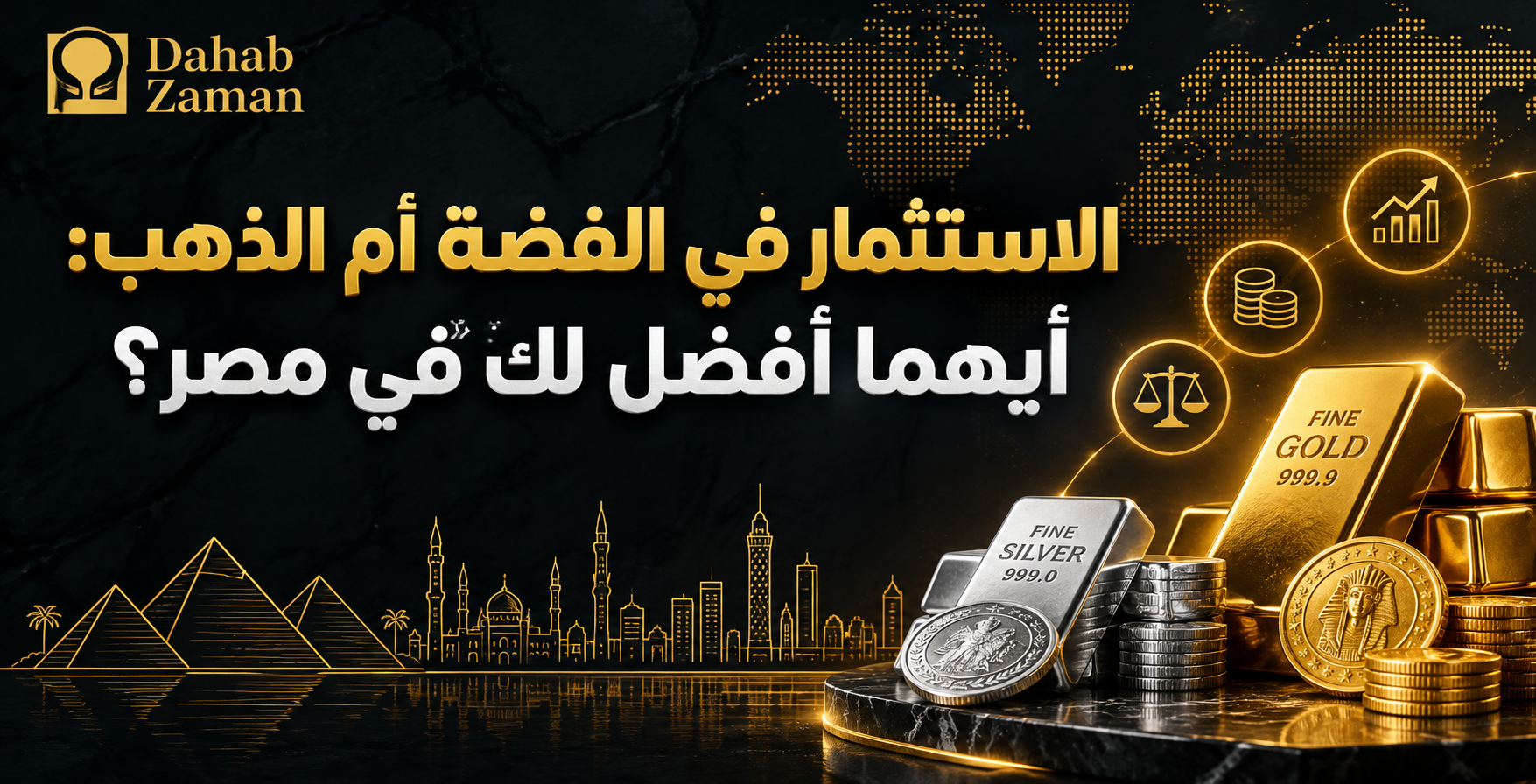
Investing in silver vs gold is the most common first question for anyone starting a precious-metals portfolio in Egypt. The honest answer is that neither metal wins outright: in 2025, gold returned roughly 65% in USD while silver surged about 148% (Sprott, 2025). Yet gold still holds the dominant share of central-bank reserves and Egyptian household savings. The World Gold Council reported central banks bought a net 863 tonnes of gold in 2025, the second-highest annual total on record. Silver plays a dual role as a monetary hedge and industrial input, with industrial demand accounting for roughly half of annual consumption (Silver Institute, 2025). Both metals are widely available through licensed dealers such as Dahab Zaman, which offers certified 24K gold bars, 21K gold coins, and 999 fine silver bars in weights from 0.25 g to 1 kg. For most Egyptian savers, investing in silver vs gold together gold as anchor, silver as satellite gives the smoothest ride and is the practical answer to investing in silver vs gold in 2026.
Gold vs Silver: Key Differences When Investing in Silver vs Gold
Gold and silver look like close cousins. Both trade in troy ounces, both are quoted in US dollars, and both are accepted as investment-grade metal in Egypt. The structural differences, however, drive every decision that follows when you compare investing in silver vs gold:
- Market size and liquidity: Annual gold trading volume is many multiples of silver's. GLD held over $80 billion at the end of 2024, versus roughly $1.5 billion for the largest silver ETF.
- Price per ounce: Spot gold trades near $4,100 per ounce in October 2026 while silver sits near $50. That 80:1 ratio is unusually wide versus the 50-year average of about 60:1.
- Purity in Egypt: Investment gold is 24K (999.9); jewellery is 21K (875) or 18K (750). Investment silver is 999 fineness.
- Volatility: Silver's daily swings run 1.5–2x gold's. Gold's annualized volatility has averaged about 16% over the last decade; silver's about 26% (Yahoo Finance).
- Industrial utility: Silver is consumed in solar panels, EVs, electronics, and medical devices; global industrial demand reached roughly 680 million ounces in 2024 (Silver Institute).
When you weigh these factors, investing in silver vs gold comes down to whether you want liquidity and stability (gold) or volatility and industrial leverage (silver).
Gold vs Silver Returns and Volatility
Both metals beat cash but underperform global equities over a 20-year window. Gold vs silver returns in 2025 were unusually lopsided, with silver outperforming by more than 80 percentage points. For investors comparing gold vs silver returns, the recent cycle is the most instructive:
- 2025: Gold gained roughly 65% in USD; silver gained close to 148% (Sprott, 2025) the widest gap since 2010.
- 2024: Gold rose about 27%; silver about 21%. Gold led.
- 10-year annualized return through October 2026: Gold approximately 9.5%; silver approximately 7.8% in USD.
- Drawdown risk: Silver fell about 57% peak-to-trough during 2011–2015 versus gold's 38%.
Silver delivers bigger upside in bull markets but cuts deeper in bear markets. Gold is the steadier store of value. For Egyptian investors whose goal is preserving purchasing power against EGP depreciation, gold has done the job with less volatility. When you weigh investing in silver vs gold, returns over a full cycle matter more than any single year, and gold vs silver returns over the last decade show why most advisors recommend a gold-heavy mix.
What Drives Gold and Silver Prices?
Both metals respond to the same macro forces, but they do not respond equally. Whether you lean toward gold or silver investment in Egypt, the same drivers shape prices and they shape every investing in silver vs gold decision.
Read more about: how to invest in gold
Inflation, Interest Rates, and the US Dollar
Real interest rates are the single most powerful driver of gold prices. When real rates fall or turn negative, gold rallies because the opportunity cost of holding a non-yielding asset disappears. Silver follows the same logic but with extra amplification from its industrial-demand tail. The US dollar matters because both metals are priced in USD a weaker dollar lifts their nominal price. In 2025, the US Federal Reserve cut rates twice and the dollar weakened, providing a tailwind for both metals (USFunds).
Industrial Demand and Central Bank Purchases
Silver's industrial demand is roughly half of total consumption, concentrated in photovoltaics, automotive (especially EVs), electronics, brazing and soldering, and medical applications. Photovoltaic demand alone consumed an estimated 190 million ounces in 2024 (Silver Institute). Gold's industrial demand is small (around 10% of consumption) but central-bank demand is enormous and structurally rising net 863 tonnes in 2025, well above the pre-2022 average of roughly 500 tonnes (World Gold Council, Gold Demand Trends Q4 2025). That steady institutional bid is one reason gold holds its value better in sell-offs.
Global Crises and Investor Demand
Both metals spike during geopolitical shocks, conflict, banking stress, and currency crises. The 2022 invasion of Ukraine, the 2023 banking turmoil, and the post-2022 Egyptian pound depreciation all triggered surges in Egyptian retail demand. When crisis hits, gold is the first port of call; silver follows, often with a delay and a bigger percentage move. Reuters described silver as "the new gold" in Egypt in early 2024, with gram prices more than doubling in 12 months.
Gold vs Silver: Costs and Resale Value
Returns are only half the story. The cost of buying and selling can quietly erase 5–15% of your capital if you pick the wrong product or dealer. When evaluating investing in silver vs gold, transaction costs often matter more than headline prices.
Purchase Premiums and Selling Spreads
Both metals trade above spot because of fabrication, distribution, certification, and dealer margin. Premiums vary by product form:
- Large gold bars (1 kg): typically 1–2% over spot.
- Small gold bars (1 g to 10 g): typically 5–10% over spot Egyptian retail shows 1 g bars near 7,100 EGP versus a spot-implied value near 6,995 EGP in October 2026.
- Gold coins (21K or 24K): typically 3–8% over spot.
- Large silver bars (1 kg): typically 5–10% over spot.
- Small silver bars (10 g to 100 g): typically 10–25% over spot.
The spread between what you pay and what you receive back is the single biggest cost in precious-metals investing. Buying larger bar sizes through a licensed, transparent dealer minimizes this drag the single best shortcut for anyone serious about the best gold investment or the best precious metal to invest in within Egypt.
Storage, Liquidity, and Transaction Costs
Gold is denser than silver, so the same dollar value of gold fits in roughly half the volume. A 1 kg gold bar is about the size of a mobile phone; a 1 kg silver bar is closer to a brick. Storage, insurance, and shipping costs therefore favor gold on a per-dollar basis. Liquidity favors gold as well Egyptian shops, banks, and licensed dealers quote a buy-back price for certified gold almost instantly, while silver buy-backs may take longer or be limited to specific dealers.
Gold vs Silver in Egypt: Local Factors
Investing in silver vs gold in Egypt has its own layer of complexity, mostly because of karat purity, currency translation, and the local dealer structure. Local factors can flip the answer to "is gold better than silver" or "is silver better than gold" for Egyptian savers specifically. Buying gold or silver for savings in Egypt is as much a question of karat and dealer choice as it is of metal choice.
Gold Karats and Silver Purity
Egyptian jewellery is dominated by 21K (875); certified 24K (999) bars are now standard for investment. When you buy 21K jewellery, you pay for craftsmanship, not just metal so your resale value is calculated on the 21K spot price minus a craftsmanship deduction. For pure investment purposes, 24K certified bars from a licensed Egyptian dealer such as Dahab Zaman give you the cleanest exposure to gold price moves. Silver in Egypt is sold almost exclusively at 999 fineness. For Egyptian buyers weighing buying gold or silver for savings, karat purity is where most resale mistakes begin.
USD/EGP Exchange Rates and Local Prices
Because gold and silver are priced globally in USD but paid for locally in Egyptian pounds, the EGP/USD rate is the swing factor that turns a global move into a local one. The EGP depreciated significantly against the USD in 2022 and 2023, and while the gap has narrowed since the March 2024 devaluation, the pound remains structurally weaker than a decade ago. As of October 2026, 24K gold trades near 7,100 EGP per gram locally versus roughly 6,980 EGP based purely on international spot a small premium reflecting local supply and demand (Dahab Pulse, Empire of Gold). Anyone checking the gold price today in Egypt should also check the international spot. Gold prices today move with both the international feed and the local EGP/USD rate and that dual feed is exactly why buying gold in Egypt is not the same as buying gold in Dubai or London.
Making Charges and Resale Deductions
Locally crafted jewellery carries a "making charge" typically 5–12% of the metal value for plain pieces and 15–25% for stone-set designs. This charge is not recoverable on resale: dealers price the piece on pure metal content only. Certified bars and coins from licensed dealers avoid this deduction entirely. This is one of the most important lessons for investing in gold for beginners in the Egyptian market.
How to Invest in Gold and Silver
There are four main ways to get exposure to precious metals, each with different costs, liquidity, and tax treatment. Choosing the right route is just as important as choosing the right metal when you compare investing in silver vs gold.
Physical Bars and Coins
The most direct route. You own the metal outright, no counterparty risk, and you can hold, gift, or sell it back to any licensed dealer. In Egypt, certified 24K gold bars and 999 silver bars from licensed dealers are the preferred form. Coins offer better divisibility (1 oz, 1/2 oz, 1/4 oz, 1/10 oz) and stronger numismatic premiums but typically carry higher fabrication costs per ounce. Browse the certified silver collection to see current weights and pricing.
ETFs, Mining Stocks, and Other Options
ETFs such as GLD (gold) and SLV (silver) let you buy exposure in brokerage accounts without taking physical delivery. They carry management fees (0.4–0.5% annually) and you do not own the metal you own a claim on a custodian. Mining stocks add equity-market risk on top of metal-price risk. For long-term wealth preservation in Egypt, physical metal in a safe or with a licensed dealer remains the cleanest option.
Should You Invest in Gold, Silver, or Both?
The right allocation depends on your goal, your timeline, and your existing portfolio. The question of investing in gold or both is really a question about how much risk you want and how patient you can be. Many investors ask which is the best precious metal to invest in there is no single answer, but a defensible framework exists.
When Gold Makes Sense for Best Gold Investment
- You want the most stable store of value over 10+ years.
- You are hedging against EGP depreciation and need high liquidity.
- You are buying in small amounts (under 5,000 EGP) where silver premiums are steep.
- You plan to gift metal for weddings or family occasions where 21K or 24K jewellery is culturally expected.
When Silver Wins: Buying Gold or Silver for Savings
- You have a longer risk horizon and can tolerate bigger drawdowns.
- You want leveraged exposure to the solar/EV industrial boom.
- You believe the gold:silver ratio (currently ~80:1) will mean-revert toward its historical 60:1 average.
- You are buying in bulk (1 kg bars) where premiums are smallest.
Diversifying Between Both Metals
Many experienced Egyptian investors hold a mix for example, 70% gold and 30% silver by value. This blend reduces the volatility of a pure-silver position while keeping upside optionality. Rebalance annually: when silver outperforms, sell some silver and buy gold; when gold outperforms, do the reverse. Check today's gold price in Egypt and the current silver quote before rebalancing.
Frequently Asked Questions
Is Gold or Silver a Better Investment?
Neither is universally better. Gold is the better choice for stability, liquidity, and lower premiums on small purchases. Silver is the better choice for higher upside in bull markets, longer horizons, and industrial-metals exposure. For most Egyptian savers, a gold-heavy allocation with a smaller silver sleeve is the most balanced approach the answer to "is gold better than silver or is silver better than gold" is almost always "both, with a tilt."
Which Metal Has Higher Returns?
Silver has outperformed gold in most years when it rallied sharply (2020, 2025), but it has also underperformed gold in extended sideways markets. Over the past 10 years, gold has returned roughly 9.5% annualized in USD versus silver's 7.8% (Yahoo Finance). The 2025 outperformance of silver (~148% vs gold ~65%) was exceptional and was driven by industrial-demand surge, gold:silver ratio mean-reversion, and tight supply (Sprott, 2025).
Is Silver Riskier Than Gold?
Yes, materially. Silver's annualized volatility is roughly 1.5–2x gold's, and its drawdowns in bear markets are deeper silver fell about 57% in 2011–2015 versus gold's 38%. Silver is also a smaller market, so single large trades can move prices more than equivalent trades in gold. Investors with short horizons or low risk tolerance should keep silver to a minority share of their precious-metals allocation.
Which Is Easier to Sell in Egypt?
Gold is easier to sell in Egypt, almost universally. Any licensed gold dealer, many jewellery shops, and most banks will quote a buy-back price for certified gold within minutes. Silver buy-back is more limited fewer shops deal in silver, and the buyer pool is narrower. If quick liquidation matters, gold wins on practical liquidity.
Should Beginners Buy Gold or Silver?
Beginners in Egypt should usually start with certified gold bars or coins from a licensed dealer, in a size that fits their monthly budget (1 g, 5 g, or 10 g bars are common entry points). Gold has lower premiums per unit, simpler pricing, and universal resale. This is the most reliable investing in gold for beginners path. Once a beginner has built a comfortable gold position, adding a smaller silver allocation ideally in 1 kg or 500 g bars to minimize premiums is a sensible second step.
Take the Next Step
If you are ready to act on what you have learned about investing in silver vs gold, certified 24K gold bars, 21K gold coins, and 999 fine silver bars are available through Dahab Zaman, one of Egypt's licensed gold dealers operating under the Investment Authority and the Stamp and Scales Authority. Buy now from Dahab Zaman to access certified bars in weights that fit every budget, from a single gram up to a kilogram position, with live local pricing tied to the Egyptian gold market. To compare gold vs silver prices side by side before you decide, check today's gold price in Egypt and review the silver collection in the same session.
Topics
- gold and silver